Tteokbokki (Korean Sweet & Spicy Rice Cakes)
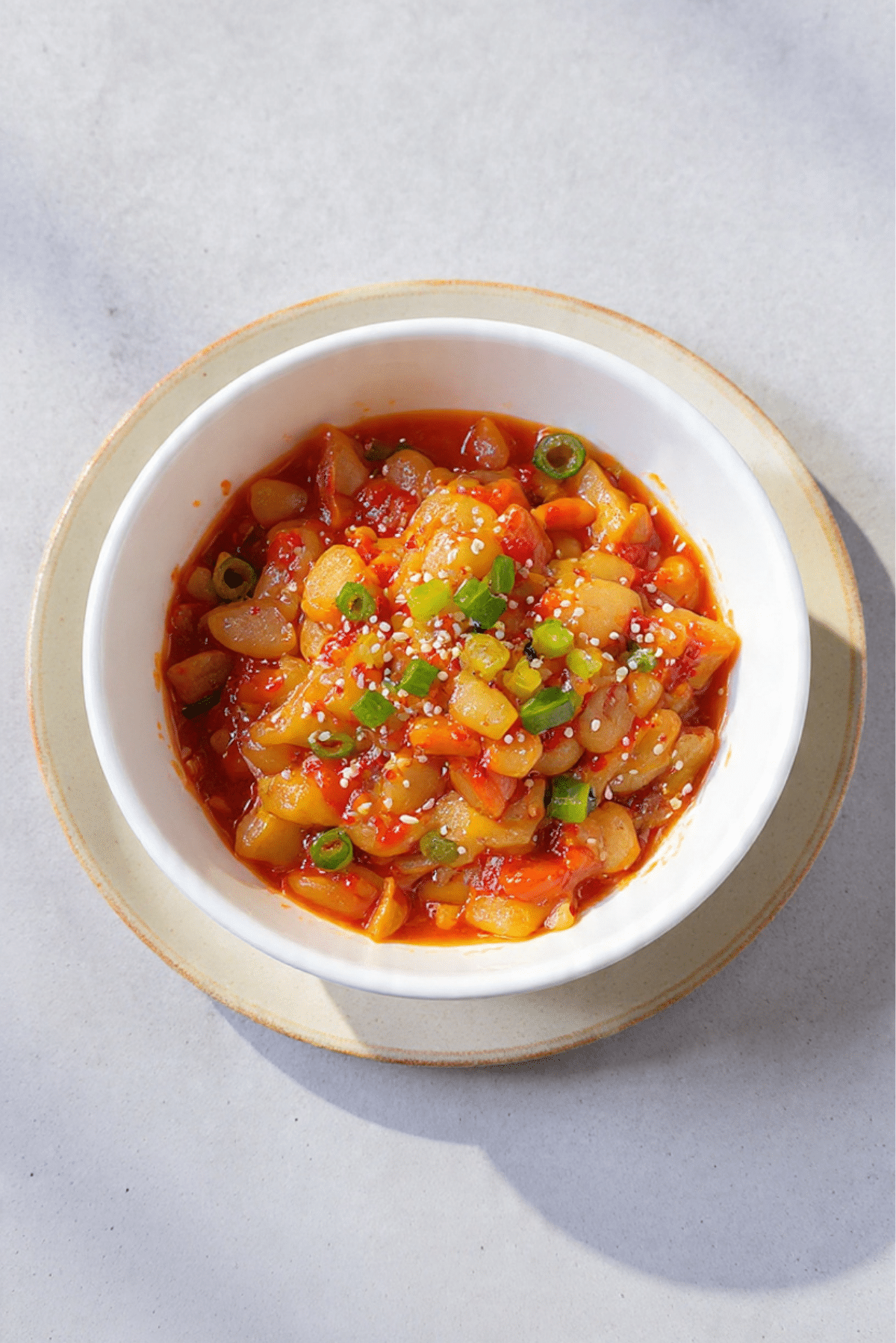
If you’ve ever wandered through the bustling streets of Seoul or watched a Korean drama, chances are you’ve seen someone devouring a steaming, spicy plate of Tteokbokki. This dish is as fiery in flavor as it is comforting in texture, with chewy rice cakes swimming in a rich, sweet-spicy sauce that warms you from the inside out. It’s bold, sticky, and completely addicting.
Behind the Recipe
There’s something undeniably nostalgic about Tteokbokki. For many, it’s a snack tied to late nights with friends, convenience store adventures, or cozy afternoons when only something hot and satisfying will do. I remember the first time I tried it on a chilly winter evening in Seoul. The steam from the vendor’s cart curled around my fingers, the sauce was vibrant red, and the first bite lit up every corner of my taste buds. Since then, it’s become a staple in my kitchen, especially when I crave something spicy, sweet, and soul-hugging.
Recipe Origin or Trivia
Tteokbokki has been around for centuries, originally appearing in royal courts as a soy-sauce-based dish called “Gungjung Tteokbokki.” Over time, it evolved into the spicy version we know today, thanks to the addition of gochujang, or Korean red pepper paste, in the mid-20th century. Now, it’s a popular street food and comfort meal across South Korea, with countless regional variations that include everything from ramen noodles to cheese or boiled eggs.
Why You’ll Love Tteokbokki (Korean Sweet & Spicy Rice Cakes)
It’s not just about the flavor. This dish brings warmth, fun, and flexibility to your table.
Versatile: Enjoy it solo as a snack, or turn it into a full meal with noodles, eggs, or dumplings.
Budget-Friendly: Most ingredients are pantry staples or easily affordable at any Asian grocery store.
Quick and Easy: From start to finish, it takes less than 30 minutes to whip up.
Customizable: Adjust the heat, toss in veggies or proteins, and make it your own.
Crowd-Pleasing: The combination of chewy, spicy, and sweet hits all the right notes for guests.
Make-Ahead Friendly: Prepare the sauce ahead of time for an even faster weeknight fix.
Great for Leftovers: Tastes even better the next day after the sauce soaks in fully.
Chef’s Pro Tips for Perfect Results
Tteokbokki may seem simple, but a few tricks can elevate it to street-vendor quality.
- Soak your rice cakes in warm water for 10-15 minutes if they’re refrigerated or frozen to soften them up.
- Use anchovy stock or dashi instead of plain water for deeper flavor.
- Don’t skimp on the gochujang, but balance it with sugar and soy sauce for the signature sweet-heat combo.
- Simmer until the sauce thickens enough to cling to each rice cake.
- Stir frequently to prevent sticking and ensure even cooking.
Kitchen Tools You’ll Need
Nothing fancy here, just your everyday essentials.
Medium Pot or Deep Skillet: For boiling and simmering everything together.
Wooden Spoon or Silicone Spatula: Great for stirring the thick sauce without scratching your pan.
Measuring Cups and Spoons: To get the flavor ratios just right.
Strainer: If you’re using anchovies or dashi packs to make broth.
Ingredients in Tteokbokki (Korean Sweet & Spicy Rice Cakes)
These ingredients work in harmony to create a bold, balanced dish you’ll keep coming back to.
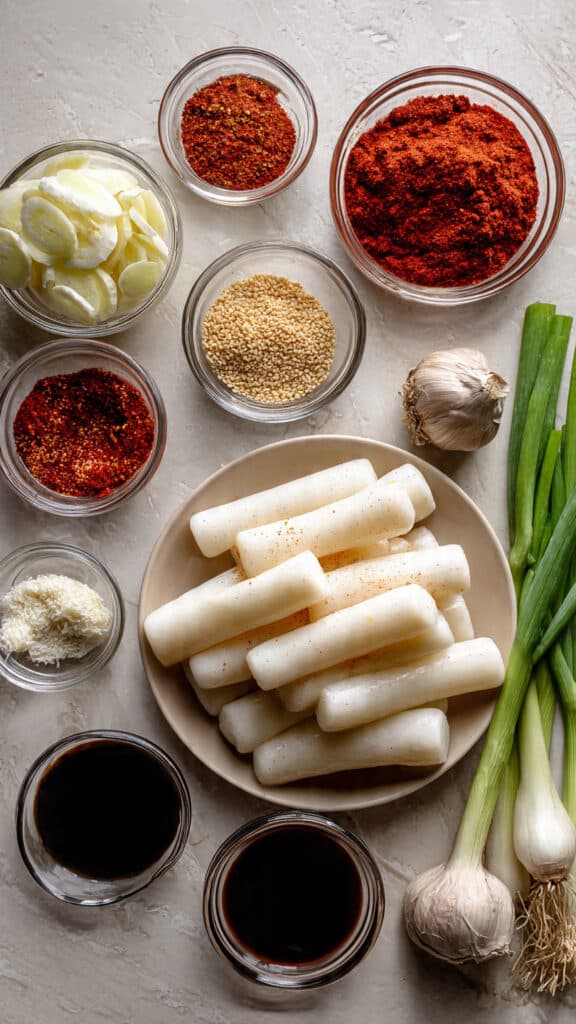
- Korean Rice Cakes (Tteok): 1 pound, cylinder-shaped – the chewy base that soaks up all the flavor.
- Fish Cakes: 1 cup, sliced – adds protein and a savory, briny kick.
- Gochujang (Korean Red Chili Paste): 3 tablespoons – brings the bold, spicy backbone.
- Gochugaru (Korean Chili Flakes): 1 tablespoon – boosts heat and deepens the red color.
- Soy Sauce: 2 tablespoons – gives saltiness and umami depth.
- Sugar: 1 tablespoon – balances the heat with sweetness.
- Garlic: 2 cloves, minced – adds aromatic depth and sharpness.
- Green Onions: 2 stalks, chopped – for freshness and garnish.
- Anchovy or Dashi Stock: 2 ½ cups – builds the broth base.
- Sesame Oil: 1 teaspoon – finishes the dish with a nutty aroma.
- Toasted Sesame Seeds: 1 teaspoon – optional garnish for crunch and visual flair.
Ingredient Substitutions
Not everyone has access to Korean markets, so here’s how you can work around it.
Korean Rice Cakes: Use gnocchi or thick udon noodles in a pinch.
Fish Cakes: Try tofu slices or shrimp for a pescatarian twist.
Gochujang: Mix miso paste with chili flakes and a bit of sugar.
Anchovy Stock: Use vegetable or chicken broth if needed.
Ingredient Spotlight
Gochujang: This thick, fermented chili paste is the soul of Korean spice. It adds complexity, heat, and a bit of sweetness all in one.
Korean Rice Cakes (Tteok): These aren’t your usual rice cakes. They’re chewy, dense, and perfect for soaking up rich sauces without falling apart.
Instructions for Making Tteokbokki (Korean Sweet & Spicy Rice Cakes)
Alright, let’s bring the flavors of Korea right into your kitchen. Here’s how to make it happen.
- Preheat Your Equipment:
Place your pot or skillet over medium-high heat. Get your ingredients ready and soak your rice cakes if needed. - Combine Ingredients:
In your pot, add anchovy stock, gochujang, gochugaru, soy sauce, sugar, and minced garlic. Stir well to dissolve the paste into the broth. - Prepare Your Cooking Vessel:
Let the mixture come to a boil, then reduce the heat slightly to maintain a simmer. - Assemble the Dish:
Add the soaked rice cakes and fish cakes. Stir to combine, ensuring everything is coated in the sauce. - Cook to Perfection:
Simmer for about 10 to 15 minutes, stirring often, until the sauce thickens and the rice cakes turn soft and chewy. - Finishing Touches:
Drizzle sesame oil, toss in green onions, and sprinkle toasted sesame seeds on top. - Serve and Enjoy:
Spoon into bowls while piping hot. Serve with extra sauce for dipping or a soft-boiled egg on the side.
Texture & Flavor Secrets
The magic of Tteokbokki is in the contrast. The rice cakes are chewy and dense, playing perfectly against the thick, sticky sauce that’s sweet up front and spicy on the finish. Every bite is bold, layered, and deeply satisfying.
Cooking Tips & Tricks
Here are a few extra tricks to make sure your Tteokbokki shines:
- Always soak refrigerated rice cakes to bring back their chewy bounce.
- Let the sauce simmer uncovered for a few minutes to concentrate flavor.
- Taste and adjust the sweetness or spiciness before serving.
What to Avoid
A few common mistakes can throw off the flavor or texture. Here’s what to watch out for:
- Skipping the broth base. Water alone won’t give enough depth.
- Overcooking the rice cakes. They’ll get mushy instead of chewy.
- Not stirring enough. The sauce can burn or clump at the bottom.
Nutrition Facts
Servings: 4
Calories per serving: 340
Note: These are approximate values.
Preparation Time
Prep Time: 10 minutes
Cook Time: 15 minutes
Total Time: 25 minutes
Make-Ahead and Storage Tips
You can absolutely prep the sauce a day or two ahead and store it in the fridge. The finished dish also keeps well in an airtight container for up to 3 days. Reheat gently on the stovetop with a splash of broth or water to loosen the sauce. Tteokbokki is not ideal for freezing due to the texture of the rice cakes, but freshly made, it’s a dream.
How to Serve Tteokbokki (Korean Sweet & Spicy Rice Cakes)
Serve it piping hot, sprinkled with green onions and sesame seeds. Pair it with soft-boiled eggs, a side of kimchi, or even some ramen noodles stirred right in. It’s perfect on its own or as part of a Korean street food spread.
Creative Leftover Transformations
Leftover Tteokbokki? Don’t let it go to waste.
- Tteokbokki Stir-Fry: Add vegetables and a protein and turn it into a spicy stir-fry.
- Rice Bowl Topper: Spoon it over warm white rice with a fried egg.
- Cheesy Bake: Layer it in a baking dish, top with cheese, and broil until bubbly.
Additional Tips
- Use a mix of gochujang and gochugaru for maximum flavor and color.
- Stir often so the sauce doesn’t scorch at the bottom.
- Add cheese or boiled eggs for a Korean street food fusion twist.
Make It a Showstopper
Plate your Tteokbokki in a shallow bowl and garnish with scallions and sesame seeds. For extra flair, place a soft-boiled egg right in the center and drizzle extra sauce on top. The vibrant red hue and glossy finish will steal the show.
Variations to Try
- Cheesy Tteokbokki: Add shredded mozzarella during the last few minutes.
- Ramen Tteokbokki (Rabokki): Stir in instant noodles for a heartier dish.
- Creamy Tteokbokki: Add a splash of milk or cream for a mellow twist.
- Seafood Tteokbokki: Include shrimp, squid, or mussels.
- Vegan Tteokbokki: Skip fish cakes and use veggie broth instead.
FAQ’s
Q1: Can I make Tteokbokki less spicy?
A1: Yes, reduce the gochugaru or gochujang and add a touch more sugar for a milder version.
Q2: Where can I buy Korean rice cakes?
A2: Most Asian grocery stores carry them in the refrigerated or frozen section.
Q3: What’s the best broth to use?
A3: Anchovy broth is traditional, but dashi or chicken broth works too.
Q4: Can I freeze Tteokbokki?
A4: Freezing is not recommended as the texture of the rice cakes changes.
Q5: How do I reheat it?
A5: Add a splash of broth or water and warm gently on the stove.
Q6: What’s a good side dish for Tteokbokki?
A6: Kimchi, pickled radish, or steamed dumplings pair wonderfully.
Q7: Is it gluten-free?
A7: Check labels. Some gochujang and soy sauces contain gluten.
Q8: Can I make it vegan?
A8: Absolutely, just use veggie broth and omit fish cakes.
Q9: How long does it keep?
A9: Up to 3 days in the fridge in an airtight container.
Q10: What’s the difference between Gungjung and modern Tteokbokki?
A10: Gungjung is soy-sauce-based and not spicy, while modern Tteokbokki is fiery and bold.
Conclusion
Tteokbokki is more than just a snack. It’s comfort in a bowl, with layers of bold flavor and textures that surprise and satisfy every time. Trust me, you’re going to love this. Whether you make it traditional or add your own twist, it’s a dish worth diving into, one chewy, spicy bite at a time.
Print
Tteokbokki (Korean Sweet & Spicy Rice Cakes)
- Prep Time: 10 minutes
- Cook Time: 15 minutes
- Total Time: 25 minutes
- Yield: 4 servings 1x
- Category: Main Dish
- Method: Simmering
- Cuisine: Korean
- Diet: Halal
Description
Tteokbokki is a beloved Korean street food made of chewy rice cakes simmered in a spicy-sweet gochujang sauce with fish cakes and green onions. This comforting dish is rich, bold, and perfect for a quick meal or snack.
Ingredients
- 1 pound Korean Rice Cakes (Tteok)
- 1 cup Fish Cakes, sliced
- 3 tablespoons Gochujang (Korean Red Chili Paste)
- 1 tablespoon Gochugaru (Korean Chili Flakes)
- 2 tablespoons Soy Sauce
- 1 tablespoon Sugar
- 2 cloves Garlic, minced
- 2 stalks Green Onions, chopped
- 2 ½ cups Anchovy or Dashi Stock
- 1 teaspoon Sesame Oil
- 1 teaspoon Toasted Sesame Seeds (optional)
Instructions
- Place your pot or skillet over medium-high heat. Soak your rice cakes in warm water if they are refrigerated or frozen.
- In the pot, add anchovy stock, gochujang, gochugaru, soy sauce, sugar, and garlic. Stir well until the paste is fully dissolved.
- Let the mixture come to a boil, then reduce the heat to maintain a simmer.
- Add the soaked rice cakes and fish cakes to the pot. Stir to ensure everything is coated in sauce.
- Simmer for 10–15 minutes, stirring often, until the sauce thickens and the rice cakes are soft and chewy.
- Drizzle with sesame oil, add green onions, and sprinkle sesame seeds on top if using.
- Serve hot and enjoy immediately.
Notes
- Soak rice cakes to revive their chewy texture if using refrigerated or frozen ones.
- Use anchovy or dashi stock for a richer, more traditional flavor.
- Adjust spiciness by reducing gochugaru or adding extra sugar.
- Leftovers can be reheated with a splash of broth to loosen the sauce.
Nutrition
- Serving Size: 1 bowl
- Calories: 340
- Sugar: 7g
- Sodium: 950mg
- Fat: 5g
- Saturated Fat: 1g
- Unsaturated Fat: 3g
- Trans Fat: 0g
- Carbohydrates: 68g
- Fiber: 2g
- Protein: 7g
- Cholesterol: 10mg
Keywords: tteokbokki, korean rice cakes, spicy korean food, street food, gochujang recipe, fish cake