
Tahdig (Crispy Persian Rice)
Imagine the sound of a golden crust cracking under your spoon, revealing tender, fragrant rice beneath. That, my friend, is the magic of Tahdig. It’s not just rice, it’s a love letter to crispy perfection. This dish transforms simple basmati rice into something luxurious, unforgettable, and utterly irresistible.
Behind the Recipe
Growing up, tahdig was more than a side dish. It was a reward. Everyone would fight for the crispy layer at the bottom of the pot, that crunchy, buttery rice crust that felt like a treasure. I still remember the gentle flipping of the pot, that moment of suspense as we waited to see if the crust came out whole. When it did, cheers erupted around the table like we had just witnessed a miracle.
Recipe Origin or Trivia
Tahdig, which literally means “bottom of the pot” in Persian, is a beloved tradition in Iranian cuisine. It’s not just about the crispy layer. It’s a symbol of patience, technique, and pride. Some families add thin layers of bread or potato to the bottom for a creative twist, while others stick to the classic saffron-infused rice crust. No Persian gathering is truly complete without it.
Why You’ll Love Tahdig (Crispy Persian Rice)
This dish is more than its looks. Here’s why it’ll win you over:
Versatile: You can serve it with any Persian stew, grilled meat, or even a fresh yogurt cucumber salad.
Budget-Friendly: Rice, butter, saffron, and a few pantry staples are all you need.
Quick and Easy: While it does require attention, the steps are simple and straightforward.
Customizable: Add yogurt, thin bread, or potato slices at the bottom for creative crusts.
Crowd-Pleasing: The dramatic flip and crispy crust always bring applause to the table.
Make-Ahead Friendly: Cook the rice earlier in the day, then crisp it up when ready to serve.
Great for Leftovers: Leftover tahdig reheats beautifully in a skillet and keeps its crunch.
Chef’s Pro Tips for Perfect Results
Getting that perfect crust takes practice, but here are some golden rules:
- Always rinse your rice thoroughly until the water runs clear. This removes excess starch and prevents stickiness.
- Parboil the rice just until al dente. You don’t want mushy grains.
- Use a nonstick or well-seasoned heavy-bottomed pan for easy flipping.
- Don’t rush it. Cook on low heat to allow the crust to form slowly and evenly.
- Steam is your friend. Cover with a towel-lined lid to trap steam and fluff up the rice.
Kitchen Tools You’ll Need
To make the perfect tahdig, your kitchen should be ready with:
Fine Mesh Strainer: For rinsing rice until it runs clear.
Large Pot: For parboiling the rice.
Nonstick or Cast Iron Pan: Essential for creating and releasing the crispy crust.
Slotted Spoon: To transfer rice gently without breaking the grains.
Clean Towel or Paper Towels: To wrap around the lid and trap steam.
Spatula or Plate: For the final flip or lifting out the tahdig.
Ingredients in Tahdig (Crispy Persian Rice)
Every component of tahdig plays a role, creating harmony between fluffy grains and golden crunch.
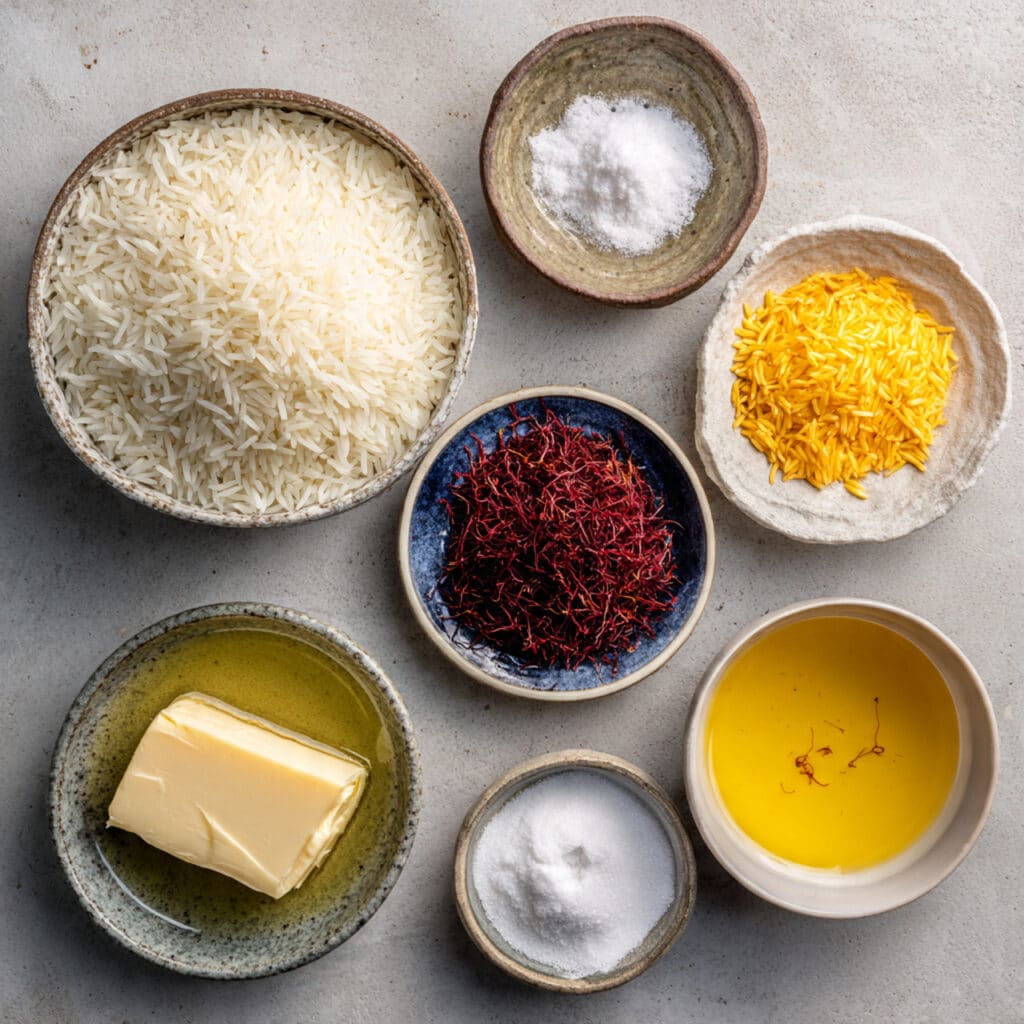
- Basmati Rice: 2 cups – Long-grain rice that cooks up light and aromatic. Always rinse and parboil for best texture.
- Salt: 2 tablespoons (for boiling water) – Seasons the rice during parboiling.
- Butter: 3 tablespoons – Creates a rich, golden crust at the base.
- Vegetable Oil: 3 tablespoons – Helps the butter brown and prevents sticking.
- Saffron Threads: 1/2 teaspoon – Steeped in warm water to release its vibrant color and floral aroma.
- Water: 1/4 cup – Helps steam the rice while forming the crust.
- Yogurt (optional): 2 tablespoons – Mixed with saffron and rice for an extra crispy bottom.
Ingredient Substitutions
Need to tweak the ingredients? No problem.
Basmati Rice: Jasmine rice can work, though texture will be slightly different.
Butter: Ghee or olive oil are good alternatives.
Saffron: Turmeric adds color, though not the same depth of flavor.
Yogurt: You can skip it or use sour cream instead.
Ingredient Spotlight
Saffron: These tiny red threads are Persian gold. They infuse the rice with a floral, honey-like aroma and give the crust its iconic golden hue.
Yogurt: Adds tanginess and extra crunch when mixed into the crust layer. A must-try variation.
Instructions for Making Tahdig (Crispy Persian Rice)
This dish may seem fancy, but you’ll see how fun and rewarding it is. Ready? Let’s begin.
- Preheat Your Equipment:
Have your nonstick or cast iron pan ready on medium heat. Steep the saffron in 2 tablespoons of warm water for 5-10 minutes. - Combine Ingredients:
Rinse the basmati rice under cold water until the water runs clear. In a large pot, bring water and salt to a boil. Add rice and boil for 6-7 minutes until slightly firm. Drain and set aside. - Prepare Your Cooking Vessel:
In the nonstick pan, melt butter and oil together. Stir in saffron water. If using yogurt, mix it with 1 cup of the parboiled rice and spread that mixture into the bottom of the pan. - Assemble the Dish:
Gently mound the remaining rice over the base without pressing it down. Use a spatula to shape it like a gentle dome, allowing steam to circulate. - Cook to Perfection:
Wrap the lid with a towel to catch condensation and place it tightly on the pan. Cook on medium-high for 8 minutes, then reduce heat to low and cook for another 30-40 minutes. - Finishing Touches:
Turn off heat and let the rice rest for 5 minutes. To serve, carefully invert the pan onto a platter or gently loosen and lift the tahdig with a spatula. - Serve and Enjoy:
Cut into wedges or break into rustic shards. Serve as a showstopping side or centerpiece to your meal.
Texture & Flavor Secrets
The joy of tahdig lies in the contrast. The base is deeply golden and crisp, like a savory rice cracker, while the rest is soft, fluffy, and infused with the perfume of saffron. Every bite brings buttery crunch and aromatic richness.
Cooking Tips & Tricks
Getting tahdig right is all about care and patience. Here are a few tips:
- Use the towel-wrapped lid trick to trap steam and avoid soggy rice.
- Listen for the gentle crackle as it cooks—music to a tahdig lover’s ears.
- Let the pan sit for a few minutes off heat to help the crust release.
What to Avoid
Avoid these common mistakes so your tahdig comes out beautifully:
- Don’t use too much oil: It will make the crust greasy instead of crispy.
- Don’t skip rinsing the rice: This leads to sticky clumps.
- Don’t rush the process: A good crust takes time. Keep the heat low and steady.
Nutrition Facts
Servings: 4
Calories per serving: 320
Note: These are approximate values.
Preparation Time
Prep Time: 15 minutes
Cook Time: 45 minutes
Total Time: 1 hour
Make-Ahead and Storage Tips
Tahdig is surprisingly friendly to prep ahead. You can parboil the rice and even steep your saffron in advance. Store in an airtight container and refrigerate for up to 2 days. Reheat the assembled dish in a nonstick pan over low heat to restore its crisp. Leftovers keep in the fridge for up to 3 days and reheat beautifully.
How to Serve Tahdig (Crispy Persian Rice)
Pair tahdig with traditional Persian stews like ghormeh sabzi or fesenjan, or serve alongside kebabs and grilled vegetables. A side of cucumber yogurt or a fresh herb platter makes it even more vibrant.
Creative Leftover Transformations
Got leftovers? Don’t toss them. Here’s what to do:
- Break up the tahdig into bite-sized pieces and add to salads for a crunchy twist.
- Warm in a skillet and serve with a fried egg for a quick breakfast.
- Crumble and sprinkle over soups or stews like savory croutons.
Additional Tips
- Steep saffron in warm—not boiling—water to unlock its flavor without bitterness.
- Add a pinch of salt to your saffron water for even better flavor distribution.
- Let the tahdig rest for a few minutes before flipping for easier release.
Make It a Showstopper
Presentation is part of the joy. Flip the rice onto a vibrant ceramic platter. Garnish with a few strands of saffron and fresh parsley or mint. Let your guests hear the satisfying crunch as you cut into it. Trust me, it’s the kind of dish that turns heads.
Variations to Try
- Potato Tahdig: Line the bottom of the pan with thin potato slices before adding rice.
- Lavash Tahdig: Use pieces of lavash bread for a flaky, crispy base.
- Yogurt Tahdig: Mix yogurt and egg yolk with rice for extra golden crisp.
- Saffron and Orange Zest: Add citrusy brightness to the saffron for a twist.
- Herbed Tahdig: Stir in dried dill or fresh parsley for a herbal pop.
FAQ’s
Q1: Can I make tahdig without saffron?
A1: Yes, though saffron adds signature flavor and color. You can use turmeric for color, but the flavor will differ.
Q2: Is tahdig hard to flip out of the pan?
A2: It can be, but letting it rest for a few minutes and using a nonstick pan helps a lot.
Q3: Can I use brown rice?
A3: It’s not traditional and won’t crisp the same way, but you can try it with slight textural differences.
Q4: Why do I need to wrap the lid in a towel?
A4: It catches condensation, so it doesn’t drip onto the rice and ruin the crust.
Q5: Can I freeze tahdig?
A5: It’s best fresh, but you can freeze the rice and recrisp it in a pan later.
Q6: What kind of pot is best?
A6: Nonstick or cast iron work best to form and release the crust.
Q7: How do I know it’s done?
A7: The smell of toasted rice and the gentle crackling sound are good signs. Peek under gently if unsure.
Q8: Can I use butter only?
A8: Yes, but mixing with oil prevents burning and gives even browning.
Q9: What should I serve it with?
A9: Persian stews, grilled meats, yogurt dips, and fresh herbs all pair beautifully.
Q10: What if my tahdig breaks?
A10: No worries! Just scoop it out in rustic chunks. It’ll still taste incredible.
Conclusion
Tahdig isn’t just a recipe. It’s a celebration. A little crispy, a little fluffy, and full of love. Whether you’re sharing it with family or cooking it just for you, tahdig brings joy to the table like no other rice dish. So get that pan sizzling, breathe in the saffron, and flip your way into something unforgettable. Trust me, it’s worth every bite.
Print
Tahdig (Crispy Persian Rice)
- Prep Time: 15 minutes
- Cook Time: 45 minutes
- Total Time: 1 hour
- Yield: 4 servings 1x
- Category: Side Dish
- Method: Stovetop
- Cuisine: Persian
- Diet: Halal
Description
Tahdig is the crown jewel of Persian rice dishes, known for its crispy golden crust and fragrant, fluffy interior. This version uses basmati rice infused with saffron and a buttery base to create a perfectly crunchy bottom that’s simply irresistible.
Ingredients
- 2 cups Basmati Rice
- 2 tablespoons Salt (for boiling water)
- 3 tablespoons Butter
- 3 tablespoons Vegetable Oil
- 1/2 teaspoon Saffron Threads
- 1/4 cup Water
- 2 tablespoons Yogurt (optional)
Instructions
- Rinse the basmati rice under cold water until the water runs clear.
- In a large pot, bring water and salt to a boil. Add the rice and boil for 6-7 minutes until al dente. Drain and set aside.
- Steep saffron threads in 2 tablespoons of warm water for 5-10 minutes.
- In a nonstick or cast iron pan, melt butter and oil together over medium heat. Stir in saffron water.
- If using yogurt, mix it with 1 cup of the parboiled rice and layer it on the bottom of the pan.
- Gently mound the rest of the rice over the bottom layer without pressing it down.
- Wrap the pan lid with a clean towel and cover tightly. Cook on medium-high heat for 8 minutes, then reduce to low and cook for another 30-40 minutes.
- Let rest for 5 minutes before carefully flipping onto a serving platter or lifting out the crust with a spatula.
Notes
- Use a towel-wrapped lid to prevent moisture from ruining the crust.
- Do not stir once rice is layered in the pan to preserve the crust.
- A nonstick or well-seasoned pan makes flipping much easier.
Nutrition
- Serving Size: 1 plate
- Calories: 320
- Sugar: 1g
- Sodium: 400mg
- Fat: 14g
- Saturated Fat: 6g
- Unsaturated Fat: 7g
- Trans Fat: 0g
- Carbohydrates: 45g
- Fiber: 1g
- Protein: 4g
- Cholesterol: 15mg
Keywords: tahdig, crispy rice, Persian rice, saffron rice, Persian cuisine