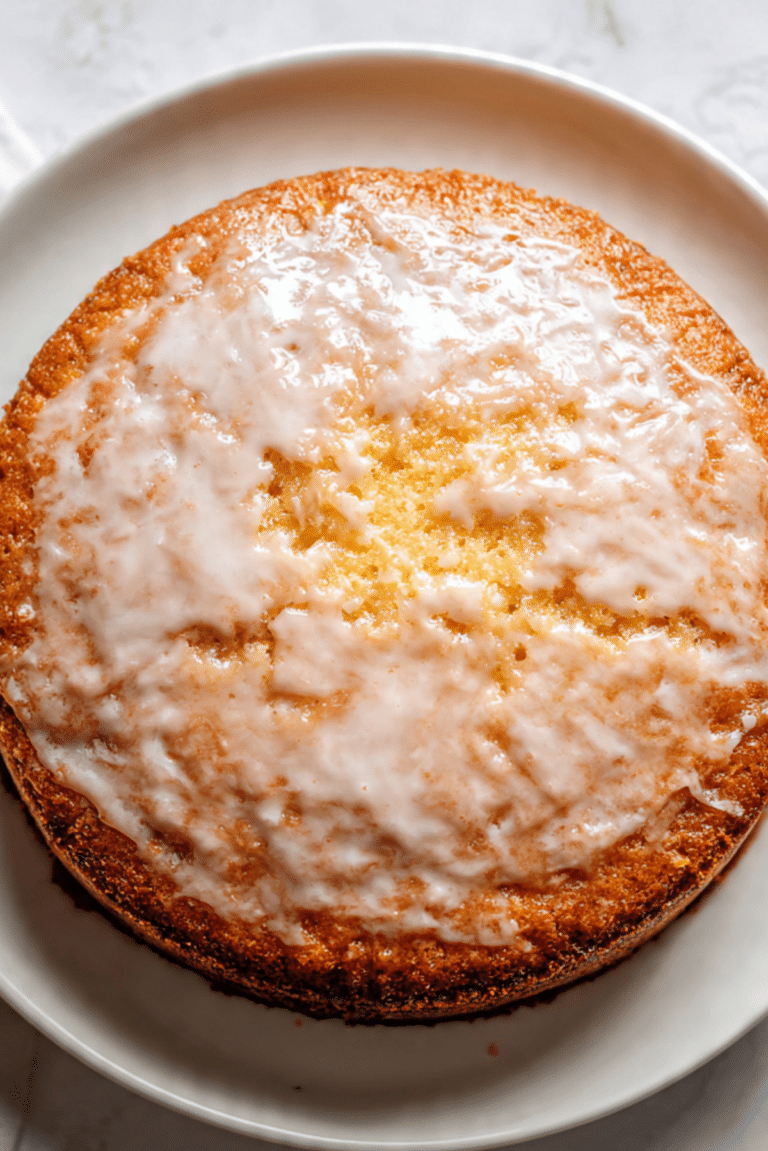
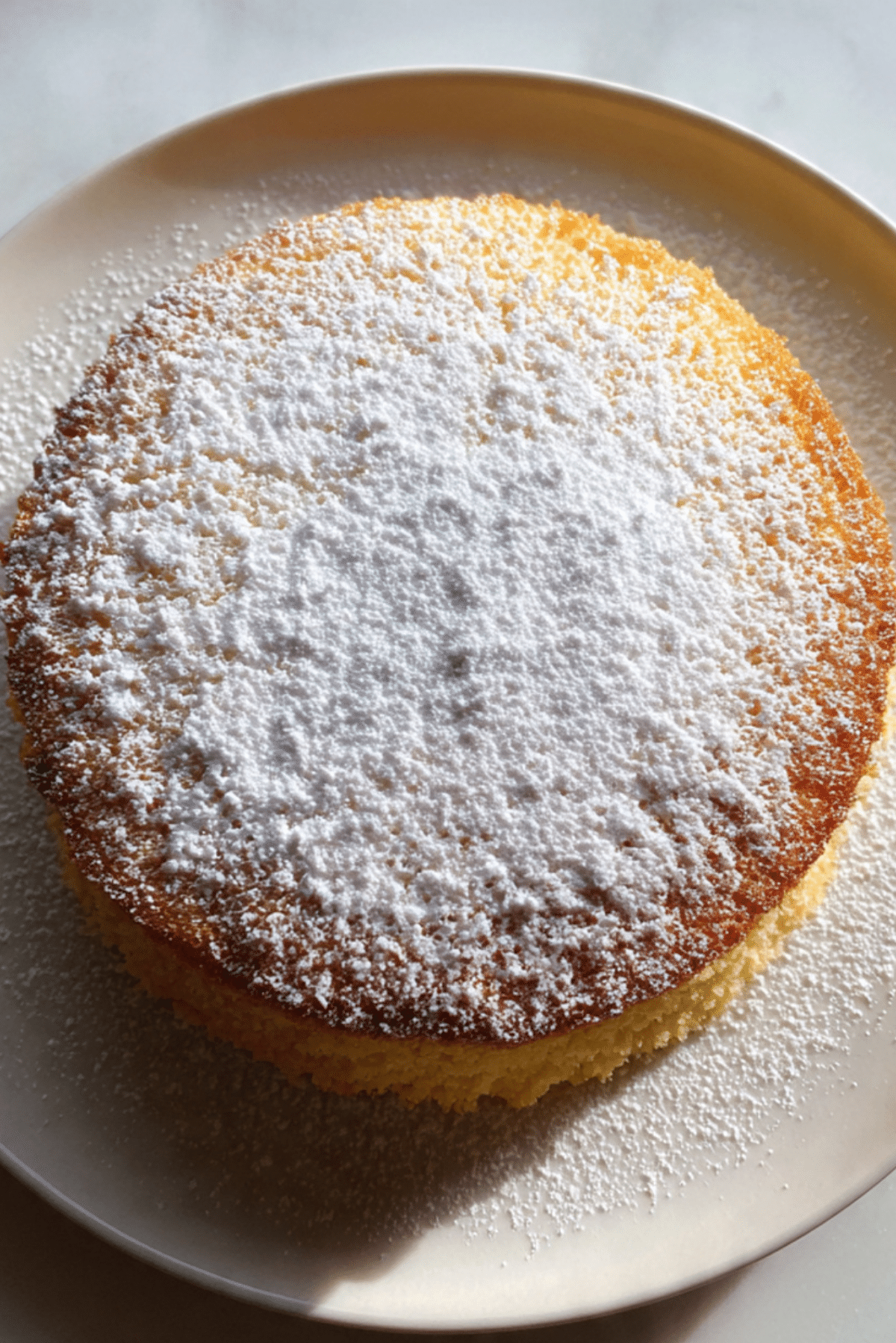
Sponge Cake
There’s something incredibly comforting about the gentle rise of a sponge cake in the oven, the sweet aroma curling through the kitchen, and the promise of a soft, golden bite at the end of it all. Light, airy, and subtly sweet, this sponge cake is one of those timeless bakes that feels like a warm hug on a plate. Whether you dress it up with fresh cream and berries or enjoy it just as it is with a dusting of sugar, every bite melts like a dream.
Behind the Recipe
This sponge cake recipe has been passed down from generations, always bringing joy to weekend gatherings and holiday tables. I remember watching my grandmother carefully fold in the egg whites with a gentle hand, whispering that patience was the key to fluffiness. That tender care, the kind that’s stirred in with each ingredient, is what makes this cake more than just dessert. It’s tradition, it’s memory, and it’s love.
Recipe Origin or Trivia
The sponge cake is believed to have originated in Europe during the Renaissance. Its name comes from its texture, which mimics the porous structure of a sponge due to the abundance of air beaten into the eggs. Unlike heavier cakes, sponge cakes rely on eggs rather than baking powder for their rise, and this technique has become a fundamental method in classic baking around the world. In Italy, it’s called “pan di Spagna” and in Japan, a similar version is known as “Kasutera.”
Why You’ll Love Sponge Cake
There are so many reasons this sponge cake deserves a spot in your go-to baking collection:
Versatile: Perfect as a base for layered cakes, trifles, or served plain with tea.
Budget-Friendly: Uses pantry staples you likely already have.
Quick and Easy: With a little technique, it comes together in no time.
Customizable: Add flavors like citrus zest, vanilla, or almond extract.
Crowd-Pleasing: Everyone loves a soft, simple cake that tastes homemade.
Make-Ahead Friendly: Bake it the day before and store it for later use.
Great for Leftovers: Use slices for trifles or soak them in syrups and creams.
Chef’s Pro Tips for Perfect Results
Nail that perfect sponge every time with these pro pointers:
- Room Temp Eggs: Let your eggs come to room temperature before beating. They’ll whip up better and hold more air.
- Be Gentle: When folding the flour into the batter, use a soft hand to keep the air bubbles intact.
- No Peeking: Avoid opening the oven door while baking. It can cause the cake to sink.
- Invert to Cool: Flip the cake upside down while it cools (if using a tube pan) to prevent collapse.
- Weigh Ingredients: Precision matters in sponge cakes. Use a kitchen scale for best results.
Kitchen Tools You’ll Need
To keep things easy and mess-free, make sure you have these on hand:
Mixing Bowls: For separating and beating the eggs.
Electric Mixer or Stand Mixer: Helps whip those eggs to stiff peaks effortlessly.
Fine Mesh Sieve: For sifting flour and making the texture extra light.
Rubber Spatula: Ideal for gently folding without deflating.
Cake Pan: A springform or standard round cake pan works perfectly.
Cooling Rack: Allows air to circulate and cool your cake evenly.
Ingredients in Sponge Cake
This recipe uses just a handful of simple ingredients, each playing a vital role in creating that signature texture and flavor.
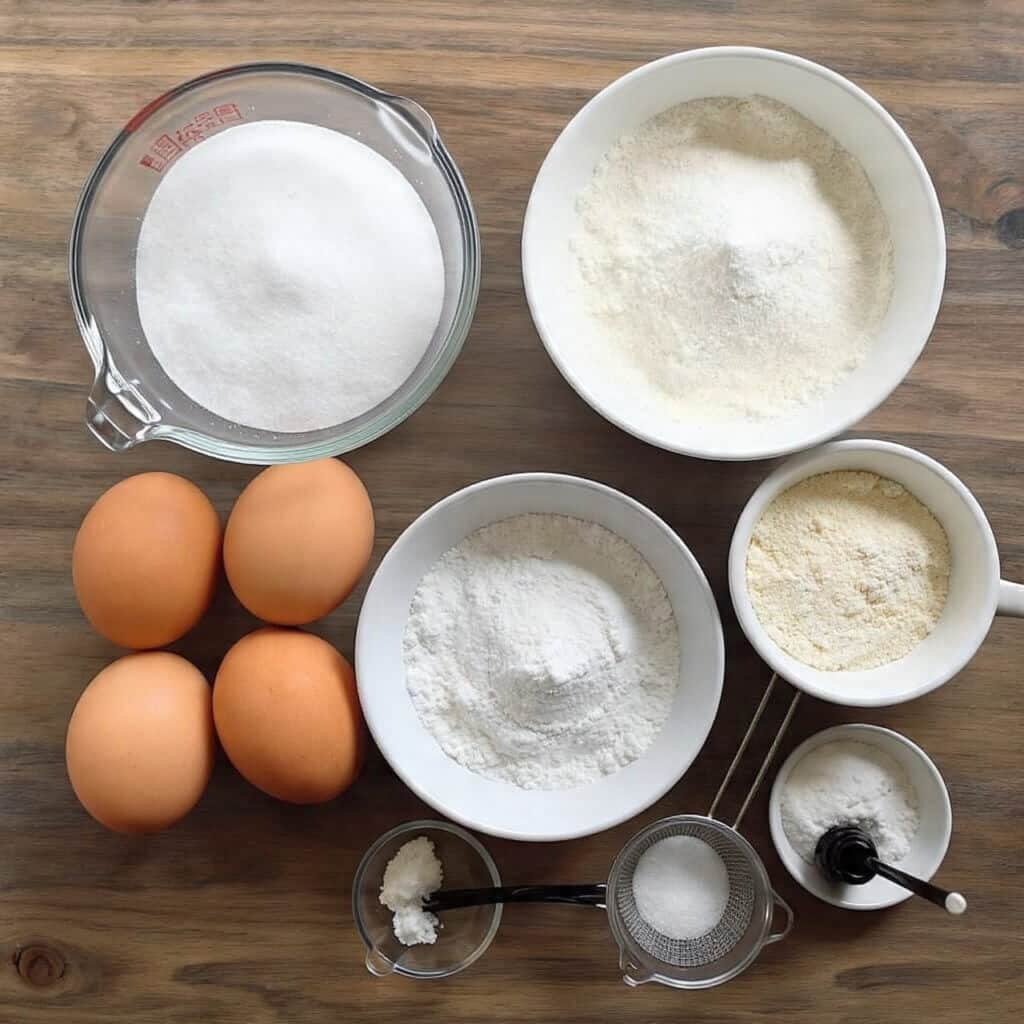
- Eggs: 6 large, room temperature. The star of the show, providing lift and structure.
- Granulated Sugar: ¾ cup. Sweetens and stabilizes the whipped eggs.
- All-Purpose Flour: 1 cup, sifted. Gives the cake its light structure.
- Cornstarch: 2 tablespoons. Adds tenderness and keeps the crumb fine.
- Vanilla Extract: 1 teaspoon. Infuses the cake with a gentle aroma.
- Salt: ¼ teaspoon. Enhances overall flavor balance.
- Powdered Sugar (optional): For dusting the top, adding a delicate finish.
Ingredient Substitutions
Here’s how to tweak the recipe if you’re missing something:
All-Purpose Flour: Cake flour for an even lighter crumb.
Cornstarch: Replace with an equal amount of flour, though the texture will be slightly firmer.
Granulated Sugar: Superfine sugar dissolves faster and whips better with eggs.
Vanilla Extract: Almond or lemon extract for a flavor twist.
Ingredient Spotlight
Eggs: The foundation of sponge cake. Whipping the whites and yolks separately allows air to be trapped, creating that signature fluffiness.
Cornstarch: A secret ingredient that lightens the flour mix and results in a more tender crumb.
Instructions for Making Sponge Cake
This process is fun and simple if you follow each step with care. Here are the steps you’re going to follow:
- Preheat Your Equipment:
Set your oven to 350°F (175°C). Line the bottom of a round 9-inch cake pan with parchment paper. Do not grease the sides. - Combine Ingredients:
Separate the eggs. Beat the yolks with half the sugar until pale and thick. In another bowl, beat the egg whites with the remaining sugar until stiff peaks form. Gently fold the whites into the yolk mixture. - Prepare Your Cooking Vessel:
Sift the flour, cornstarch, and salt together, then gradually fold into the egg mixture. Add the vanilla extract and stir gently just until combined. - Assemble the Dish:
Pour the batter into the prepared pan, smoothing the top with a spatula. - Cook to Perfection:
Bake for 25 to 30 minutes or until the top is golden and springs back when touched lightly. - Finishing Touches:
Let the cake cool in the pan for 5 minutes, then invert onto a rack. Once cool, dust with powdered sugar. - Serve and Enjoy:
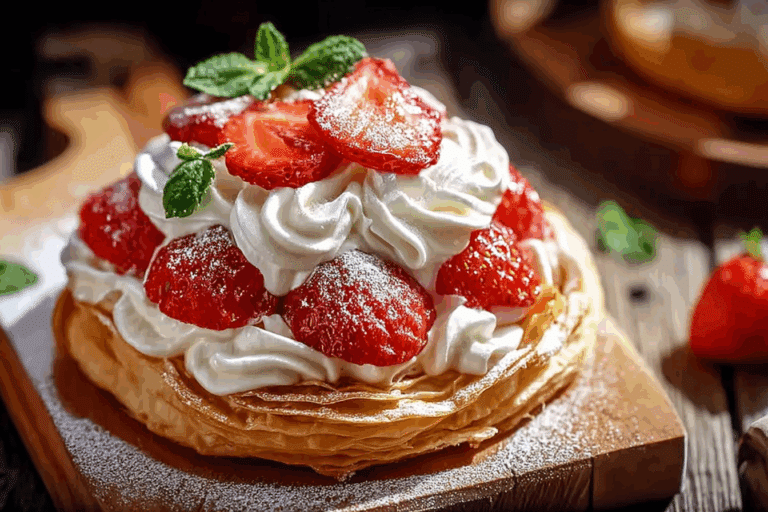
Slice and enjoy as is, or pair it with whipped cream and berries for a delightful treat.
Texture & Flavor Secrets
What makes this cake special is its texture that’s both light and slightly springy, like biting into a cloud. The subtle sweetness combined with the gentle notes of vanilla make every bite feel classic and comforting. The crust is barely golden, while the inside stays soft and pillow-like.
Cooking Tips & Tricks
Want your cake to shine every time? Keep these in mind:
- Sift dry ingredients twice for a finer texture.
- Fold in flour slowly to avoid deflating the batter.
- Cool the cake upside down to maintain volume (especially for tube pans).
What to Avoid
Even simple cakes need some finesse. Here’s what to watch out for:
- Overmixing the batter, which deflates the air bubbles.
- Using cold eggs, which won’t whip up as well.
- Opening the oven too early and causing collapse.
Nutrition Facts
Servings: 8
Calories per serving: 210
Note: These are approximate values.
Preparation Time
Prep Time: 15 minutes
Cook Time: 30 minutes
Total Time: 45 minutes
Make-Ahead and Storage Tips
This cake is a dream for prepping ahead. Once baked and cooled, wrap it tightly and store at room temperature for up to 2 days. It also freezes beautifully. Just wrap slices individually in plastic wrap and store in an airtight container. To reheat, thaw and lightly warm in the microwave or oven.
How to Serve Sponge Cake
Serve it plain with tea, layer it with jam and cream, or drizzle it with fruit syrup for a dessert twist. Add a scoop of vanilla ice cream for extra indulgence. It’s also a great base for layered celebration cakes with frosting.
Creative Leftover Transformations
Got extra slices? Don’t let them go to waste.
- Cube and layer into a trifle with pudding and fruit.
- Use as a base for mini tiramisu cups.
- Make sponge cake French toast for breakfast.
Additional Tips
- Avoid greasing the pan sides. The batter needs to cling and rise.
- Let the cake cool completely before slicing to avoid crumbling.
- Use a serrated knife for clean, smooth slices.
Make It a Showstopper
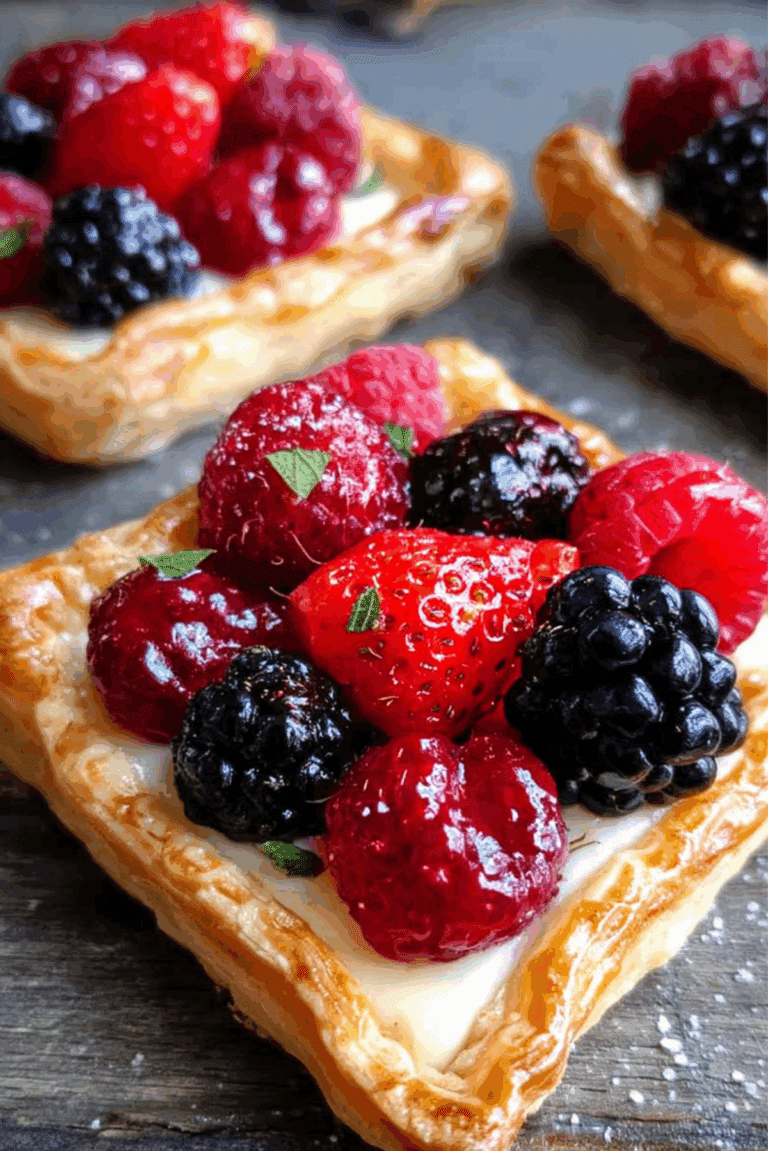
Presentation matters, even with simple cakes. Top with edible flowers, fresh fruit, or a powdered sugar stencil design. Serve on a beautiful cake stand with matching plates for extra charm.
Variations to Try
- Lemon Sponge: Add lemon zest and a splash of juice for citrusy brightness.
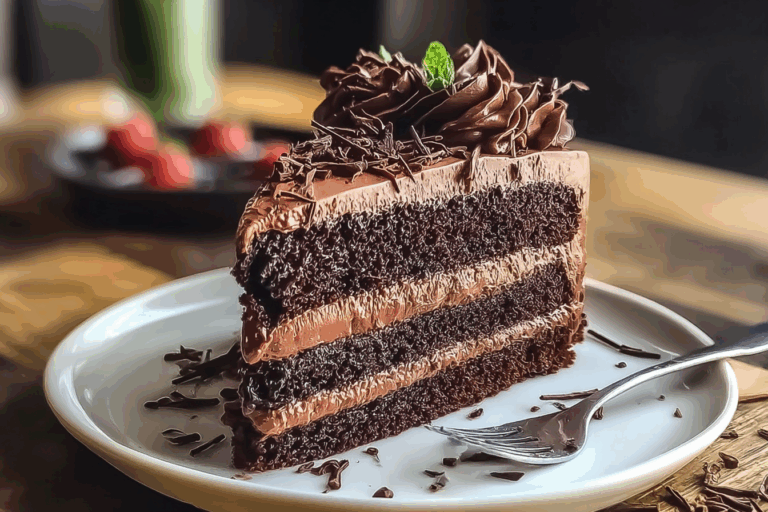
- Chocolate Sponge: Replace 2 tablespoons of flour with cocoa powder.
- Matcha Sponge: Add a teaspoon of matcha powder for earthy flavor.
- Filled Sponge: Slice in half and spread with whipped cream and strawberries.
- Coconut Twist: Fold in shredded coconut for extra texture and flavor.
FAQ’s
Q1: Can I make this cake without a mixer?
Yes, but it will take more time and effort to whip the eggs by hand. A mixer is highly recommended for best results.
Q2: Why did my sponge cake deflate?
It may have been overmixed or the oven door was opened too early during baking.
Q3: Can I use whole wheat flour?
You can, but it will change the texture and make the cake denser.
Q4: Is this cake gluten-free?
Not as written, but you can try using a gluten-free flour blend.
Q5: Can I freeze sponge cake?
Absolutely. Wrap slices well and store in the freezer for up to 2 months.
Q6: How do I know when it’s done baking?
It should be golden on top and spring back when touched lightly in the center.
Q7: Can I add fruits to the batter?
Yes, but toss them in flour first to keep them from sinking.
Q8: Is this recipe good for layer cakes?
It’s perfect for layering. Just be sure to cool it completely before slicing.
Q9: How do I keep it moist?
Avoid overbaking and store it in an airtight container.
Q10: Can I use this recipe for cupcakes?
Yes, just adjust the baking time to around 15–18 minutes.
Conclusion
This sponge cake is the kind of recipe that quietly becomes a staple in your kitchen. It’s simple but elegant, light yet satisfying, and endlessly versatile. Whether you bake it for guests, birthdays, or just a cozy night in, trust me, you’re going to love this. It’s one of those feel-good cakes that never fails to impress.
Print
Sponge Cake
- Prep Time: 15 minutes
- Cook Time: 30 minutes
- Total Time: 45 minutes
- Yield: 8 servings 1x
- Category: Dessert
- Method: Baking
- Cuisine: European
- Diet: Vegetarian
Description
A classic sponge cake that’s light, fluffy, and delicately sweet. Perfect for any occasion and incredibly easy to make with just a few pantry staples.
Ingredients
- 6 large eggs, room temperature
- ¾ cup granulated sugar
- 1 cup all-purpose flour, sifted
- 2 tablespoons cornstarch
- 1 teaspoon vanilla extract
- ¼ teaspoon salt
- Powdered sugar, for dusting (optional)
Instructions
- Preheat oven to 350°F (175°C). Line the bottom of a 9-inch round cake pan with parchment paper. Do not grease the sides.
- Separate the eggs. Beat the yolks with half the sugar until thick and pale. Beat the whites with the remaining sugar until stiff peaks form.
- Gently fold the yolk mixture into the whites using a spatula.
- Sift together the flour, cornstarch, and salt. Gradually fold into the egg mixture along with the vanilla extract until just combined.
- Pour batter into the prepared pan and smooth the top.
- Bake for 25–30 minutes until golden and the top springs back when touched.
- Cool in pan for 5 minutes, then invert onto a cooling rack. Once cool, dust with powdered sugar if desired and serve.
Notes
- Use room temperature eggs for best volume when whipping.
- Be gentle when folding in flour to keep the batter airy.
- Let the cake cool completely before slicing for clean cuts.
Nutrition
- Serving Size: 1 slice
- Calories: 210
- Sugar: 18g
- Sodium: 80mg
- Fat: 4g
- Saturated Fat: 1g
- Unsaturated Fat: 2g
- Trans Fat: 0g
- Carbohydrates: 35g
- Fiber: 0g
- Protein: 6g
- Cholesterol: 140mg
Keywords: sponge cake, fluffy cake, easy sponge cake, classic cake recipe