Burmese Samusa Soup
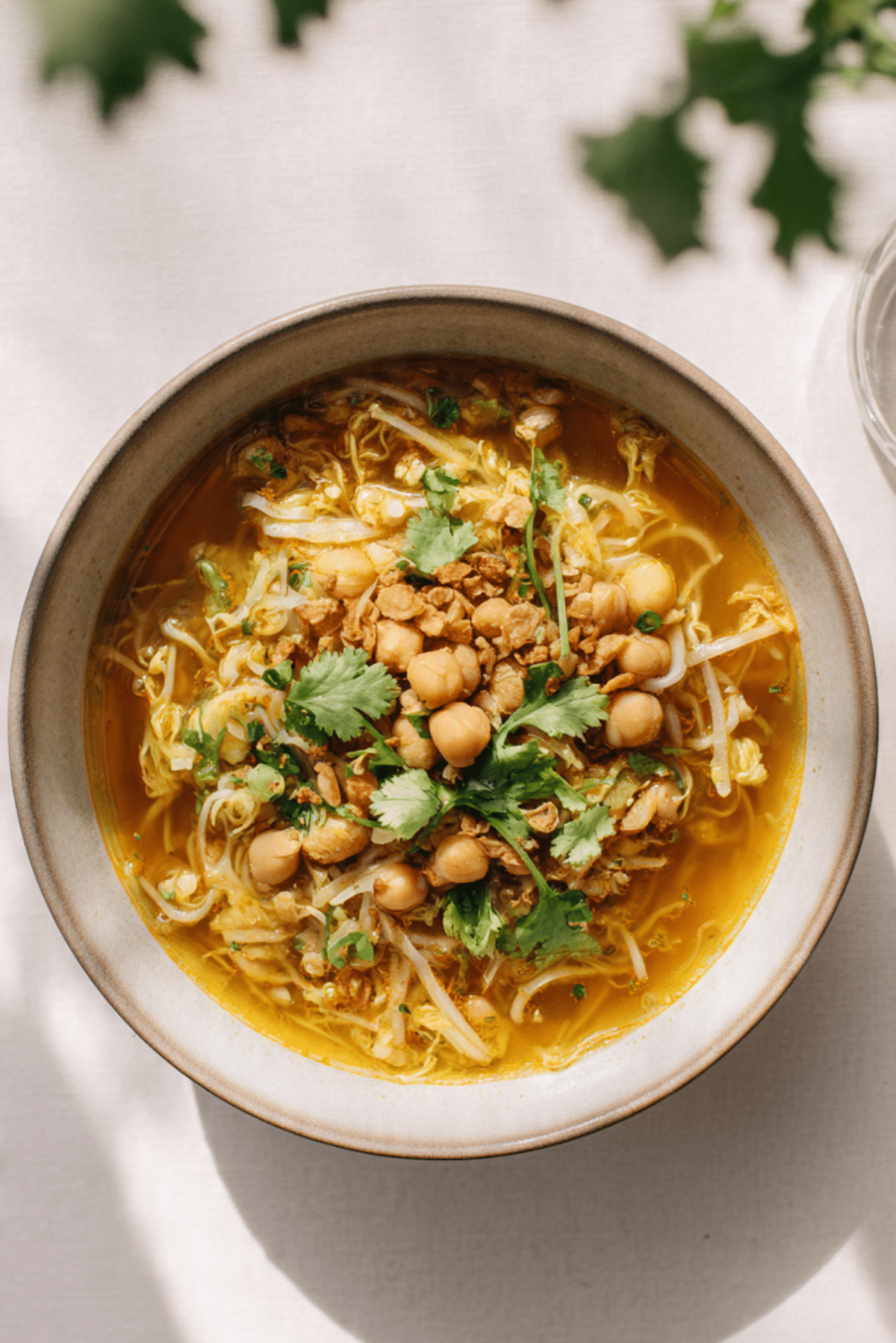
There is something deeply comforting about a warm bowl of Burmese samusa soup, especially when the broth is gently steaming and the aroma of spices fills the kitchen. From the first spoonful, you get that cozy feeling that makes you slow down, breathe in, and enjoy the moment. Trust me, you’re going to love this. It is hearty without being heavy, soothing yet full of texture, and honestly, it feels like a hug in a bowl.
Why This Soup Feels Like Pure Comfort in a Bowl
This dish brings together crisp samusas, soft noodles, and a savory broth in a way that feels both exciting and familiar. Every bite offers contrast, crunchy edges soaking up broth, tender vegetables melting into the soup, and gentle spices warming you from the inside out. Let me tell you, it’s worth every bite, especially on days when you want something nourishing but still fun to eat.
A Little Background and Cultural Touch
Burmese samusa soup is inspired by street food traditions in Myanmar, where samusas are often enjoyed not just as snacks but as part of a larger meal. The soup version turns a simple fried pastry into something more soulful. It reflects the Burmese love for layered textures and balanced flavors, where nothing is overpowering, yet everything works together beautifully. This kind of dish is often served casually, shared with family, and enjoyed slowly.
Why This Recipe Works Every Single Time
This one’s a total game-changer for home cooks because it is dependable and flexible.
Versatile: You can serve it as a light meal, a starter, or even a comforting dinner when paired with something fresh on the side.
Budget-Friendly: Most of the ingredients are simple pantry items and vegetables, which keeps costs low.
Quick and Easy: The steps are straightforward, and you do not need any fancy techniques.
Customizable: You can adjust spice levels, add more vegetables, or tweak textures easily.
Crowd-Pleasing: The mix of crispy and soft elements makes it appealing to many tastes.
Make-Ahead Friendly: The broth can be prepared in advance and reheated gently.
Great for Leftovers: It reheats beautifully and tastes even better the next day.
Pro Tips From the Kitchen
Before we dive deeper, here are a few expert tips that make all the difference.
- Lightly crush some of the samusas before adding them so they soak up more broth
- Keep the broth gently simmering, not boiling, to protect the noodles’ texture
- Add fresh herbs at the end for brightness and aroma
Essential Tools You Will Need
You do not need much, which makes this recipe even more approachable.
Large pot: This gives enough room for the broth and all the fillings to mingle.
Ladle: Perfect for serving and making sure each bowl gets a good mix.
Cutting board and knife: For preparing fresh vegetables neatly.
Ingredients You Will Need For This Recipe
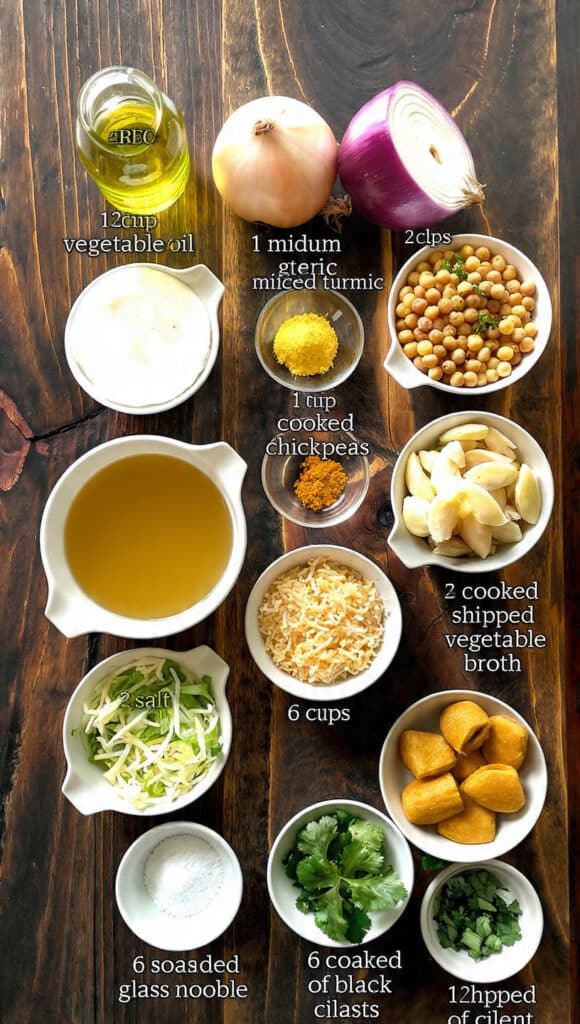
Everything comes together through balance, each ingredient playing its part in the final bowl.
- Vegetable oil: 1 tablespoon, used to gently sauté aromatics and build flavor.
- Onion: 1 medium, thinly sliced, adds sweetness and depth.
- Garlic: 3 cloves, minced, brings warmth and aroma.
- Ground turmeric: 1 teaspoon, gives color and earthy flavor.
- Vegetable broth: 6 cups, forms the savory base of the soup.
- Chickpeas: 1 cup, cooked, add heartiness and protein.
- Green cabbage: 2 cups, shredded, softens beautifully in the broth.
- Glass noodles: 100 grams, soaked, provide silky texture.
- Vegetable samusas: 6 pieces, cooked and chopped, add crisp richness.
- Salt: 1 teaspoon, balances all flavors.
- Black pepper: ½ teaspoon, adds gentle heat.
- Fresh cilantro: ¼ cup, chopped, finishes the soup with freshness.
Simple Ingredient Swaps That Work Well
Cooking should feel flexible, not stressful.
Glass noodles: Rice noodles can be used instead.
Chickpeas: Yellow split peas work nicely too.
Cabbage: Napa cabbage or bok choy are great alternatives.
Spotlight on Key Ingredients
Samusas: These bring crunch and richness, soaking up broth while keeping some bite.
Glass noodles: They absorb flavor and create that slurpable, comforting texture.
Let’s Walk Through the Cooking Journey Together
Now let’s dive into the heart of it and start cooking.
- Preheat Your Equipment: Place a large pot over medium heat and let it warm gently.
- Combine Ingredients: Add vegetable oil, then onion and garlic, sautéing until soft and fragrant.
- Prepare Your Cooking Vessel: Stir in turmeric and let it bloom briefly in the oil.
- Assemble the Dish: Pour in vegetable broth, chickpeas, and cabbage, then bring to a gentle simmer.
- Cook to Perfection: Add glass noodles and chopped samusas, cooking until noodles are tender.
- Finishing Touches: Season with salt and black pepper, then turn off the heat.
- Serve and Enjoy: Ladle into bowls and top with fresh cilantro.
Texture and Flavor Development
As the soup simmers, the broth deepens and the noodles soften while still holding shape. The samusas release their spices into the liquid, creating a layered flavor that feels complex yet comforting. The cabbage becomes tender, adding subtle sweetness, and the final sprinkle of herbs brightens everything.
Helpful Cooking Tips You Will Appreciate
- Soak noodles just until flexible, not fully soft
- Add samusas near the end to keep some texture
- Taste and adjust seasoning slowly
Common Mistakes and How to Avoid Them
- Overcooking noodles, which makes them mushy
- Boiling the soup too hard, which dulls flavors
- Adding herbs too early, which reduces freshness
Nutrition Facts You Should Know
Servings: 4
Calories per serving: 320
Note: These are approximate values.
Preparation Time Breakdown
Prep Time: 15 minutes
Cook Time: 25 minutes
Total Time: 40 minutes
Make-Ahead and Storage Tips
This soup can be made ahead by preparing the broth and vegetables first. Store in the refrigerator for up to three days. Reheat gently on the stove, adding a splash of broth if needed. For best texture, add fresh noodles and samusas when reheating.
How to Serve It Beautifully
Serve hot in deep bowls with extra cilantro on top. A squeeze of lemon on the side adds brightness. It pairs well with a light salad or simple flatbread.
Creative Leftover Ideas
Leftover soup can be thickened slightly and enjoyed as a stew. You can also strain the solids and serve them over rice with extra broth.
Extra Tips for Best Results
Always taste before serving and adjust seasoning slowly. Fresh herbs make a big difference, so do not skip them.
Make It a Showstopper
Use wide bowls and make sure each serving shows noodles, vegetables, and samusas clearly. A final sprinkle of herbs makes it pop visually.
Variations to Try Next Time
- Add extra vegetables like carrots or spinach
- Increase spice with a pinch of chili flakes
- Use a richer broth for deeper flavor
FAQ’s
1. Can I make this soup ahead of time?
Yes, the broth can be prepared in advance and reheated gently.
2. Will the samusas get soggy?
They soften slightly but still hold texture if added near the end.
3. Is this soup filling enough for dinner?
Absolutely, especially with the noodles and chickpeas.
4. Can I freeze it?
Freeze the broth only, then add fresh noodles and samusas later.
5. What herbs work best?
Cilantro is traditional and adds freshness.
6. Can I add more vegetables?
Yes, this soup is very forgiving.
7. Is it spicy?
It is mild, but you can adjust easily.
8. Can I use store-bought samusas?
Yes, they work perfectly here.
9. Does it reheat well?
Yes, gently reheated on the stove is best.
10. Can I make it thicker?
Add fewer liquids or more solids for a heartier bowl.
Conclusion
This Burmese samusa soup is one of those recipes that feels special yet approachable. It brings warmth, texture, and comfort together in a way that makes you want to come back for seconds. Trust me, once you try it, it will find a permanent spot in your rotation
Print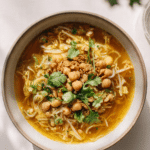
Burmese Samusa Soup
- Prep Time: 15 minutes
- Cook Time: 25 minutes
- Total Time: 40 minutes
- Yield: 4 servings 1x
- Category: Soup
- Method: Simmering
- Cuisine: Burmese
- Diet: Vegetarian
Description
A comforting Burmese-inspired soup made with a savory golden broth, tender glass noodles, chickpeas, soft cabbage, and crispy vegetable samusas that soak up flavor while keeping a satisfying bite.
Ingredients
- 1 tablespoon vegetable oil
- 1 medium onion, thinly sliced
- 3 garlic cloves, minced
- 1 teaspoon ground turmeric
- 6 cups vegetable broth
- 1 cup cooked chickpeas
- 2 cups green cabbage, shredded
- 100 grams glass noodles, soaked
- 6 vegetable samusas, cooked and chopped
- 1 teaspoon salt
- 1/2 teaspoon black pepper
- 1/4 cup fresh cilantro, chopped
Instructions
- Heat the vegetable oil in a large pot over medium heat.
- Add the sliced onion and minced garlic, cooking until soft and fragrant.
- Stir in the ground turmeric and cook briefly to release its aroma.
- Pour in the vegetable broth, then add the chickpeas and shredded cabbage.
- Bring the soup to a gentle simmer and cook until the cabbage softens.
- Add the soaked glass noodles and chopped samusas to the pot.
- Cook until the noodles are tender and the samusas have absorbed some broth.
- Season with salt and black pepper, then remove from heat.
- Ladle into bowls and garnish with fresh cilantro before serving.
Notes
- Add the samusas near the end to keep some texture.
- Reheat gently to avoid overcooking the noodles.
- Adjust seasoning slowly to balance the broth.
Nutrition
- Serving Size: 1 bowl
- Calories: 320
- Sugar: 6 g
- Sodium: 780 mg
- Fat: 11 g
- Saturated Fat: 2 g
- Unsaturated Fat: 8 g
- Trans Fat: 0 g
- Carbohydrates: 42 g
- Fiber: 8 g
- Protein: 10 g
- Cholesterol: 0 mg
Keywords: Burmese soup, samusa soup, vegetarian soup, comforting soup, glass noodle soup