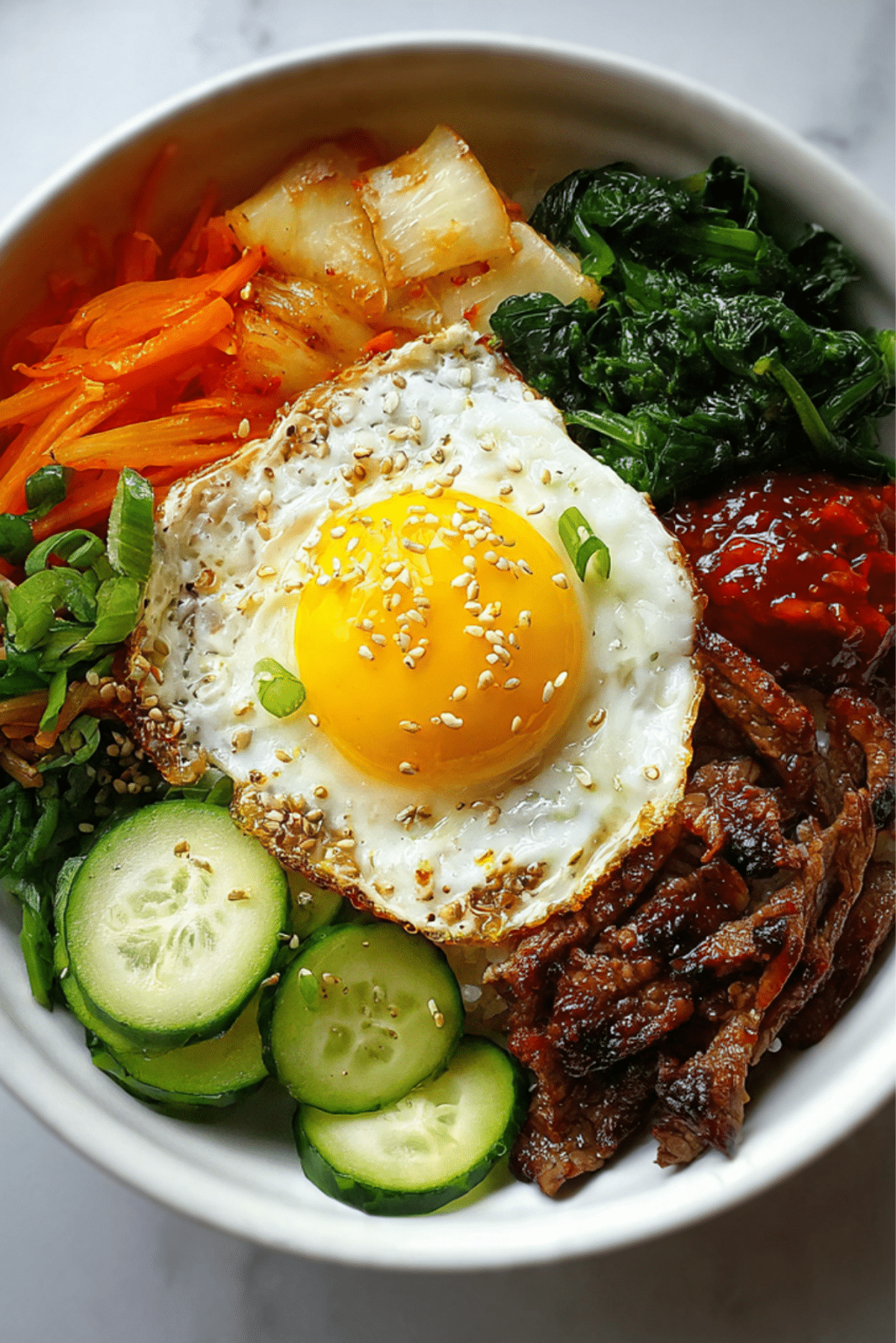
Bibimbap (Korean Mixed Rice Bowl)
Bibimbap is more than just a meal — it’s a vibrant celebration of flavors, textures, and colors all coming together in one beautiful bowl. From the warm bed of fluffy rice to the crisp sautéed vegetables, perfectly marinated meat, and rich, runny egg yolk drizzled with spicy-sweet gochujang sauce, every bite is a flavorful harmony that keeps you coming back for more.
Behind the Recipe
I remember the first time I tasted bibimbap — it was at a tiny Korean eatery, tucked into a side street, where the aroma of sesame oil and sizzling beef filled the air. That first spoonful changed everything. I was hooked. Since then, recreating this dish at home became my go-to when I needed something nourishing, comforting, and colorful. This version brings together all the traditional elements with a simple, approachable twist.
Recipe Origin or Trivia
Bibimbap, which means “mixed rice,” dates back to the 16th century in Korea. Originally, it was a way to use up leftover side dishes by mixing them into a bowl of rice. Over time, it evolved into a much-loved staple of Korean cuisine. Traditionally served in a hot stone bowl (dolsot), the dish often features beef, assorted vegetables, a fried egg, and gochujang sauce, making it a balanced, hearty meal with deep cultural roots and countless variations across regions.
Why You’ll Love Bibimbap (Korean Mixed Rice Bowl)
Bibimbap is not just a feast for the stomach — it’s a feast for the eyes, too. Here’s why it deserves a spot in your weekly rotation.
Versatile: You can mix and match toppings based on what you have.
Budget-Friendly: Use simple vegetables and pantry ingredients to keep it affordable.
Quick and Easy: Prepped and plated in under an hour with basic steps.
Customizable: Make it vegetarian, vegan, or add tofu, chicken, or seafood.
Crowd-Pleasing: The colorful presentation and bold flavors win over everyone.
Make-Ahead Friendly: Prep components in advance and assemble when ready.
Great for Leftovers: A great way to use up cooked veggies or rice from the night before.
Chef’s Pro Tips for Perfect Results
Getting bibimbap just right is all about balance — of flavor, texture, and color.
- Use day-old rice for better texture that holds up to mixing.
- Julienne vegetables evenly for a beautiful presentation and even cooking.
- Cook each veggie separately to preserve individual flavors and textures.
- Sear beef quickly over high heat for tenderness and flavor.
- Stir the gochujang sauce with sesame oil and a bit of sugar for a balanced taste.
Kitchen Tools You’ll Need
You don’t need a dolsot (stone bowl), though it’s a nice touch. Here’s what to have on hand:
Non-Stick Skillet or Wok: For sautéing veggies and cooking beef.
Small Saucepan: To prepare or warm up gochujang sauce if needed.
Rice Cooker or Pot: To cook the rice.
Sharp Knife: For slicing vegetables and beef.
Mixing Bowls: To keep each topping separate and tidy.
Spatula or Tongs: For flipping and stir-frying.
Ingredients in Bibimbap (Korean Mixed Rice Bowl)
Each ingredient adds a layer of flavor, texture, or color, working in harmony for a balanced and stunning dish.
- Cooked White Rice: 2 cups. Serves as the hearty base that ties everything together.
- Carrot: 1 medium, julienned. Adds sweet crunch and vibrant orange color.
- Zucchini: 1 small, julienned. Lightly sautéed for soft texture and freshness.
- Bean Sprouts: 1 cup. Blanched for a tender, juicy bite.
- Spinach: 1 cup. Blanched and seasoned lightly with sesame oil.
- Shiitake Mushrooms: 1/2 cup, sliced. Sautéed to add umami depth.
- Marinated Beef (Bulgogi): 1/2 pound thinly sliced beef. Quick-seared for a savory, caramelized layer.
- Egg: 1, fried sunny-side-up. Rich yolk adds creaminess when mixed in.
- Gochujang Sauce: 2 tablespoons. Spicy-sweet Korean chili paste that ties everything together.
- Sesame Oil: 2 teaspoons. For drizzling and sautéing vegetables.
- Sesame Seeds: 1 teaspoon. A nutty garnish for added texture.
- Garlic: 2 cloves, minced. Boosts flavor in spinach and mushrooms.
- Salt: to taste. Enhances natural flavors in each component.
Ingredient Substitutions
Bibimbap is incredibly flexible. Here’s how to adjust based on what’s in your fridge.
Beef: Use tofu, chicken, or sautéed tempeh for protein.
Spinach: Try kale or bok choy.
Shiitake Mushrooms: Use button or cremini mushrooms.
White Rice: Use brown rice or cauliflower rice.
Gochujang Sauce: Mix sriracha with a touch of honey and soy sauce as a backup.
Ingredient Spotlight
Gochujang: This fermented Korean chili paste is spicy, sweet, and savory. It adds depth and a signature kick that makes bibimbap shine.
Sesame Oil: Just a few drops of this nutty oil elevate each ingredient and bring cohesion to the dish.
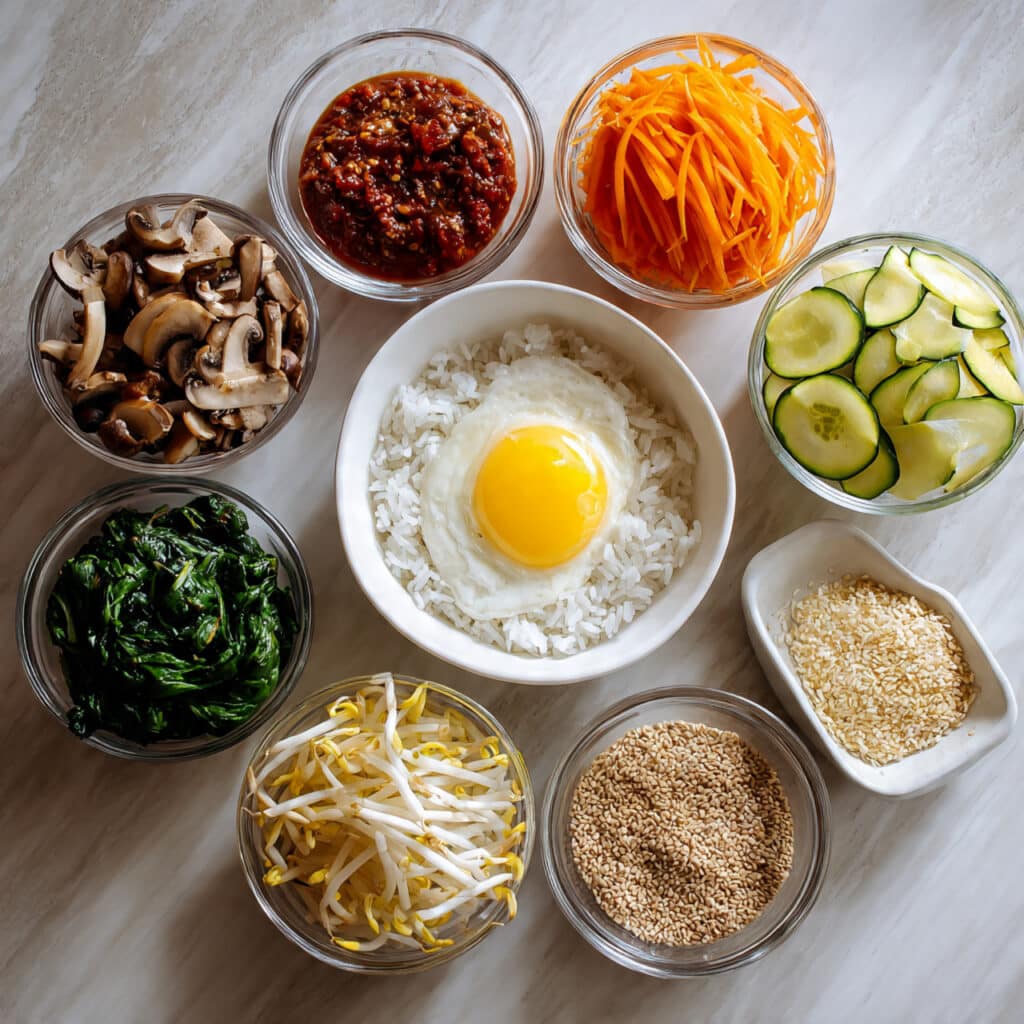
Instructions for Making Bibimbap (Korean Mixed Rice Bowl)
This is a dish that’s built in layers, and every step adds flavor. Here’s how to bring it all together.
1. Preheat Your Equipment:
Heat your skillet or wok over medium-high heat before cooking the toppings for even sautéing.
2. Combine Ingredients:
Start by cooking the rice and preparing all the veggies. Blanch spinach and bean sprouts separately. Sauté carrots, zucchini, and mushrooms individually in sesame oil, seasoning each with a pinch of salt. Set each aside.
3. Prepare Your Cooking Vessel:
Use the same skillet to quickly stir-fry the marinated beef until just cooked through. Set aside.
4. Assemble the Dish:
Scoop rice into serving bowls. Neatly arrange the vegetables and beef on top in sections like a colorful wheel. Place the sunny-side-up egg in the center.
5. Cook to Perfection:
If using a dolsot (stone bowl), place it over heat before assembling to get that crispy rice bottom. Otherwise, everything is ready to eat.
6. Finishing Touches:
Drizzle sesame oil and gochujang sauce over the top. Sprinkle with sesame seeds.
7. Serve and Enjoy:
Serve hot. Let your guests mix everything together right before eating for the ultimate flavor fusion.
Texture & Flavor Secrets
Every bite of bibimbap brings contrast. Soft rice, crisp veggies, juicy beef, creamy yolk, and the zingy heat of gochujang create a full spectrum of textures. Sautéing each component separately helps preserve its integrity, giving the final bowl layers of color and depth.
Cooking Tips & Tricks
Master bibimbap with these helpful tricks:
- Use chilled rice for dolsot versions to get a crispy bottom.
- Keep each vegetable’s cook time short to retain crunch and color.
- Slice beef thinly for faster cooking and better marinade absorption.
- Add a small drizzle of soy sauce to mushrooms for extra umami.
What to Avoid
Let’s keep your bibimbap bright and balanced.
- Don’t overcrowd the pan when cooking beef or veggies.
- Avoid overcooking the egg — you want that yolk runny.
- Don’t skip seasoning the veggies — it adds vital flavor.
Nutrition Facts
Servings: 2 bowls
Calories per serving: 580
Note: These are approximate values.
Preparation Time
Prep Time: 25 minutes
Cook Time: 20 minutes
Total Time: 45 minutes
Make-Ahead and Storage Tips
Each component can be prepped a day or two in advance. Store them separately in airtight containers in the fridge. When ready to eat, reheat the rice and toppings, fry a fresh egg, and assemble. Leftovers store well for 2 to 3 days and make an easy lunch or dinner.
How to Serve Bibimbap (Korean Mixed Rice Bowl)
Serve bibimbap hot with the sauce on the side for individual control over spice level. Pair with kimchi, pickled radish, or a bowl of miso soup for a full Korean meal experience.
Creative Leftover Transformations
Give your bibimbap leftovers a second life.
- Toss everything into a hot skillet for a quick stir-fry version.
- Wrap in seaweed sheets for homemade Korean-style wraps.
- Top with melted cheese for a fusion bibimbap bake.
Additional Tips
- Garnish with julienned cucumber or shredded lettuce for freshness.
- Add a raw egg yolk instead of fried for a traditional dolsot touch.
- Sprinkle with thinly sliced green onions for color and crunch.
Make It a Showstopper
Use a wide, shallow bowl for best visual impact. Arrange ingredients in a rainbow pattern around the egg. Finish with a glossy drizzle of sauce and a sprinkle of toasted sesame seeds.
Variations to Try
- Vegan Bibimbap: Swap beef for tofu and skip the egg.
- Seafood Bibimbap: Add shrimp or sautéed squid for a coastal twist.
- Spicy Bibimbap: Add more gochujang and thin-sliced chili peppers.
- Kimchi Bibimbap: Mix in chopped kimchi for a tangy, spicy punch.
- Breakfast Bibimbap: Top with scrambled eggs and avocado for a morning version.
FAQ’s
Q1: Can I make bibimbap vegetarian?
Yes, just skip the beef and load up on vegetables or tofu.
Q2: What is the best rice to use?
Short-grain white rice is traditional, but jasmine or brown rice also work.
Q3: Is bibimbap served hot or cold?
Traditionally hot, but it can also be served cold, especially in summer.
Q4: Can I use a different sauce instead of gochujang?
Yes, try soy sauce mixed with sesame oil and a touch of honey.
Q5: Do I need a stone bowl?
Not at all — a regular bowl works just fine.
Q6: How spicy is gochujang?
Mild to medium. You can control heat by adjusting the amount used.
Q7: Can I make it gluten-free?
Yes, just ensure your gochujang and soy sauce are certified gluten-free.
Q8: How long do leftovers last?
About 2 to 3 days refrigerated, components stored separately.
Q9: What meat works best besides beef?
Chicken, pork, or shrimp are great alternatives.
Q10: Can I prep it ahead for meal prep?
Absolutely. Store ingredients separately and assemble fresh.
Conclusion
Bibimbap is one of those dishes that feels like a warm hug in a bowl — nourishing, satisfying, and endlessly customizable. Whether you stick to tradition or add your own spin, one thing’s for sure: it’s worth every bite. So gather your favorite ingredients and start building your own colorful rice bowl masterpiece today.
Print
Bibimbap (Korean Mixed Rice Bowl)
- Prep Time: 25 minutes
- Cook Time: 20 minutes
- Total Time: 45 minutes
- Yield: 2 servings 1x
- Category: Main Dish
- Method: Stir-Fry
- Cuisine: Korean
- Diet: Low Lactose
Description
Bibimbap is a vibrant and flavorful Korean mixed rice bowl loaded with vegetables, marinated beef, a sunny-side-up egg, and spicy gochujang sauce. This comforting dish is colorful, balanced, and deeply satisfying.
Ingredients
- 2 cups cooked white rice
- 1 medium carrot, julienned
- 1 small zucchini, julienned
- 1 cup bean sprouts
- 1 cup spinach
- 1/2 cup shiitake mushrooms, sliced
- 1/2 pound marinated beef (bulgogi style)
- 1 egg, fried sunny-side-up
- 2 tablespoons gochujang sauce
- 2 teaspoons sesame oil
- 1 teaspoon sesame seeds
- 2 garlic cloves, minced
- Salt to taste
Instructions
- Cook rice and set aside, keeping it warm.
- Blanch spinach and bean sprouts separately. Season lightly with sesame oil and salt.
- Sauté carrots, zucchini, and mushrooms one at a time in sesame oil with a pinch of salt. Set aside.
- Stir-fry marinated beef in a hot skillet until cooked through.
- Fry egg sunny-side-up in a lightly oiled pan.
- Arrange rice in serving bowls. Top with vegetables, beef, and the fried egg in separate sections.
- Drizzle with gochujang sauce and sesame oil. Sprinkle with sesame seeds.
- Serve hot. Mix all ingredients together before eating for full flavor.
Notes
- Use chilled rice if serving in a hot stone bowl for a crispy bottom.
- Slice vegetables thinly and evenly for better presentation and cooking.
- Adjust spice level by adding more or less gochujang.
Nutrition
- Serving Size: 1 bowl
- Calories: 580
- Sugar: 5g
- Sodium: 620mg
- Fat: 20g
- Saturated Fat: 4g
- Unsaturated Fat: 14g
- Trans Fat: 0g
- Carbohydrates: 70g
- Fiber: 6g
- Protein: 28g
- Cholesterol: 115mg
Keywords: bibimbap, korean rice bowl, mixed rice, bulgogi rice bowl, healthy korean recipe